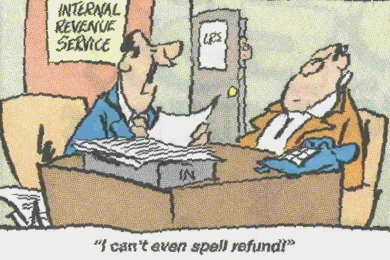
Are you still waiting for your refund cheque from the tax department. Well so is Zenobia Aunty. To read more, click here.
As always, for your convenience, the column is also cut and pasted below.
Gimme my money!
Lubna Kably
TUESDAY, FEBRUARY 27, 2007
I recall an ad that has stuck in my memory. Gimme Red! I think it was an ad for Eveready Batteries. Exotic energy drinks like Red Bull were not available in that time and age. This was the era when Rasna ruled, where a cute kid repeatedly said: We love you Rasna!
Enough said about the ad world. After all this is a tax related column. Now it is perhaps time to take a cue from the Eveready ad, but to say it differently: Gimme my money! The US based IRS is doing just that this year. It is all set to make significant refunds during the year 2007. It is expected that more than 160 million tax payers will seek a “Telephone Excise Tax Refund” while filing their tax returns for the financial year 2006 (The financial year in the US is the calendar year). Economists at the US Department of Treasury estimate that the amount refunded to individuals will be about USD 10 billion.
This refund pertains to taxes paid on long distance or bundled services for which the users were billed during the period between Feb 28, 2003 and August 1, 2006. Federal courts have held that tax could not be imposed on such calls, hence the refund.
A standard refund amount can be claimed while filing the tax return. If any taxes are payable this would go towards reducing the tax burden immediately at the time of computation of tax payable for the year 2006.
Tax refunds are a sensitive issue for my Zenobia Aunty. Even her charisma has been unable to help her, when it comes to claiming tax refunds.
As FICCI rightly points out in its pre budget memorandum: In spite of streamlining the refund procedure, the refund amount is not being credited into the tax payers bank accounts specifically mentioned in the tax returns.
Refund vouchers, at times, pre-dated, to escape the interest liability, are sought to be handed over personally to the tax payer for obvious reasons. Tax Officers should be obliged to give credit to the bank account provided by the tax payers and be held accountable for any defaults in this regard, adds FICCI.
The story as regards interest on tax refunds is no different. Section 244A provides for payment of interest at 6 per cent for delay in grant of refund. However, no time limit is prescribed within which the appeal effect is to be given and refund to the granted by the tax officer.
Provisions should be introduced in the tax laws stipulating that effect be given to the order of the higher tax authorities, tribunals, courts within a prescribed period, especially in refund cases. Incidentally the Citizen Charter of the Income tax Department which was rolled out with much fan fare a couple of years ago, calls for giving effect to appellate orders within 30 days of the receipt of such orders and issue of refunds within 30 days of its determination.
The Right to Information Act, 2005 (RTI Act) could prove handy to Zenobia Aunty. Her friend, Narayan Varma, a Mumbai based chartered accountant, quoted in several newspapers including sister publications of this paper, has successfully obtained refunds by taking this path.
In effect, it means politely asking where the refunds are stuck. Bombay Chartered Accountants Society is providing service to the aggrieved tax payers by holding tax clinics and educating people on how to take recourse to the RTI Act
In respect of all requests received from citizens under the RTI Act, the respective Chief Public Information Officer has to provide the information within 30 days of receiving the request, failing which there is a penalty imposed on him. An appellate mechanism is also available to the applicant who has sought the information.
All this is fine, but is it fair, that tax payers have to tread on another path to seek what is rightfully theirs – their very own tax refund?
The process is in place, bank account numbers are to be provided in tax returns. All it requires is change of law to ensure that relief orders are actioned upon within a specified period of time and that in all instances there is a direct credit to the bank account of the tax payer within this prescribed period of time. If the IRS can deal with 160 million tax payers and their refund claims, I do not see why we cannot.
The Citizens Charter calls upon us to be prompt, honest and accurate; to pay our taxes in time and to quote our PAN in all our tax returns and correspondence. But I guess, reciprocity is the key word here. Honest tax payers deserve their due – that of getting their timely tax refunds with the correct interest.
(The author is a chartered accountant. Views are personal)
Tuesday, February 27, 2007

Tuesday, January 30, 2007
What do the stars fortell? Law street in The Economic Times (January 2007)
It is that time of the year again. Everyone is seeking favours albeit through pre budget memorandums sent or presented to the Ministry of Finance. There is much talk of helping the struggling Small Scale Sector in India. Is this just lip service? Zenobia Aunty in this month's column has some suggestions. So read on and enjoy.
As always,for reading it on the online edition of The Economic Times click here.
If this proves difficult, here it is below, cut and pasted, just for you. Happy reading.
What do the stars foretell?
LUBNA KABLY
[ TUESDAY, JANUARY 30, 2007 ]
Sun in Sagittarius, Moon in Gemini, Ascendant in Pisces, so goes my birth chart which I received as a new year gift and I look at it perplexed, but curious. Do birth charts really portray one’s character? Guess what, when I next behave in an erratic manner I can blame it on the stars.
May be an astrologer could rake in a fortune by predicting what the budget will hold for us. I wonder when P Chidambaram’s birthday is. Do his stars indicate that he is a risk taker, or someone who follows cold logic?
I think the finance minister likes to dream big — big bang is more his personal style rather than just a scattering of a few not so flamboyant announcements. Yet, politics reins his imagination (or shall we say dreams), as the last budget announcements amply prove.
This year instead of announcing something new as he has done in the past — like tax-free dividend for shareholders, or even tax-free perks for employees which albeit went hand in hand with introduction of dividend distribution tax and fringe benefit tax for India Inc, PC would be much appreciated if he introduced rationalisation and simplification of the Income-tax Act, 1961 (‘the Act’).
According to Ficci, if one were to take into consideration, not just the basic corporate tax rate, but also the fringe benefit tax (FBT) rate and the dividend distribution tax (DDT) rate then India Inc pays a tax of 40% or more.
A US-based investor recently had the same query. True, he was to set up a subsidiary in India in the IT sector, eligible for a tax holiday until March 31, 2009. However, it did not seem to him that he was getting a tax holiday — not if this subsidiary had to pay DDT and FBT.
Zenobia Aunty, who was spending the cold winter months in the serene sunny environment of Alibaugh, took pity on me and resurfaced in Bangalore. Since then, she has been web-surfing and reading up on tax mechanisms the world over. Of course, she is also dictating to me — right now she is dictating this column.
It seems that in order to get rid of the hassles of FBT, a few trade associations are recommending an increase of 1% in corporate tax rate. It would be good if FBT is restricted to certain sectors of industry or to large companies.
In fact, it would be even better, if the Finance Bill could provide for a differential tax rate for large and small companies. Zenobia Aunty informs me that in the UK, the corporate tax rate is 30%.
However, if the taxable profits of a company during a fiscal year are less than £300,000, the small companies’ rate of corporate tax of 19% may be claimed. There are in fact a few such slabs available. A ‘nil’ rate of corporate tax applies if the taxable income is less than £10,000 in a fiscal year. US tax laws also contain a slab mechanism for corporate tax rates.
Possibly the introduction in India of a slab-based mechanism of corporate tax or a differential tax rate for small and large corporate entities would be helpful.
In India, a notification dated July 18, 2006 had notified that the Micro, Small and Medium Enterprises Development Act, 2006 (the Act), will come into force from October 2, 2006. Well, this Act is now in place.
One of the primary objectives of this Act is to ensure timely and smooth flow of credit to the small and medium enterprises (SMEs). It provides for mandatory payment of interest in case of delayed payments by buyers to suppliers from the SME segment.
Further, to add the sting to this penal provision, this Act provides that such interest payment shall not be allowed as a business deduction in the hands of the buyer. The buyers also have to disclose certain information in their audited annual accounts. The aim of this legislation is laudable. But a better idea would be a lower rate of corporate tax for the SME segment.
This newly enacted Act has defined micro, small and medium enterprises in terms of the value of investments in plant and machinery and also on whether they operate in the manufacturing or service sector. To illustrate loosely, if an enterprise is engaged in the manufacture of goods, it is a micro enterprise, provided the investments in plant and machinery do not exceed Rs 25 lakh.
If it operates in the service sector, then the cut off limit is Rs 10 lakh. The same definitions could be adopted even for the purpose of the Income-tax Act. Differential corporate tax slabs could accordingly be introduced.
Further, I know we (Zenobia Aunty and I) say this every year, but the entire concept of minimum alternate tax (MAT) does require a rethink. Now let us see what the Finance Bill, 2007 will bring forth, both for you, me and indeed for India Inc (including the SME segment).
(The author is a CA. Views are personal.)
As always,for reading it on the online edition of The Economic Times click here.
If this proves difficult, here it is below, cut and pasted, just for you. Happy reading.
What do the stars foretell?
LUBNA KABLY
[ TUESDAY, JANUARY 30, 2007 ]
Sun in Sagittarius, Moon in Gemini, Ascendant in Pisces, so goes my birth chart which I received as a new year gift and I look at it perplexed, but curious. Do birth charts really portray one’s character? Guess what, when I next behave in an erratic manner I can blame it on the stars.
May be an astrologer could rake in a fortune by predicting what the budget will hold for us. I wonder when P Chidambaram’s birthday is. Do his stars indicate that he is a risk taker, or someone who follows cold logic?
I think the finance minister likes to dream big — big bang is more his personal style rather than just a scattering of a few not so flamboyant announcements. Yet, politics reins his imagination (or shall we say dreams), as the last budget announcements amply prove.
This year instead of announcing something new as he has done in the past — like tax-free dividend for shareholders, or even tax-free perks for employees which albeit went hand in hand with introduction of dividend distribution tax and fringe benefit tax for India Inc, PC would be much appreciated if he introduced rationalisation and simplification of the Income-tax Act, 1961 (‘the Act’).
According to Ficci, if one were to take into consideration, not just the basic corporate tax rate, but also the fringe benefit tax (FBT) rate and the dividend distribution tax (DDT) rate then India Inc pays a tax of 40% or more.
A US-based investor recently had the same query. True, he was to set up a subsidiary in India in the IT sector, eligible for a tax holiday until March 31, 2009. However, it did not seem to him that he was getting a tax holiday — not if this subsidiary had to pay DDT and FBT.
Zenobia Aunty, who was spending the cold winter months in the serene sunny environment of Alibaugh, took pity on me and resurfaced in Bangalore. Since then, she has been web-surfing and reading up on tax mechanisms the world over. Of course, she is also dictating to me — right now she is dictating this column.
It seems that in order to get rid of the hassles of FBT, a few trade associations are recommending an increase of 1% in corporate tax rate. It would be good if FBT is restricted to certain sectors of industry or to large companies.
In fact, it would be even better, if the Finance Bill could provide for a differential tax rate for large and small companies. Zenobia Aunty informs me that in the UK, the corporate tax rate is 30%.
However, if the taxable profits of a company during a fiscal year are less than £300,000, the small companies’ rate of corporate tax of 19% may be claimed. There are in fact a few such slabs available. A ‘nil’ rate of corporate tax applies if the taxable income is less than £10,000 in a fiscal year. US tax laws also contain a slab mechanism for corporate tax rates.
Possibly the introduction in India of a slab-based mechanism of corporate tax or a differential tax rate for small and large corporate entities would be helpful.
In India, a notification dated July 18, 2006 had notified that the Micro, Small and Medium Enterprises Development Act, 2006 (the Act), will come into force from October 2, 2006. Well, this Act is now in place.
One of the primary objectives of this Act is to ensure timely and smooth flow of credit to the small and medium enterprises (SMEs). It provides for mandatory payment of interest in case of delayed payments by buyers to suppliers from the SME segment.
Further, to add the sting to this penal provision, this Act provides that such interest payment shall not be allowed as a business deduction in the hands of the buyer. The buyers also have to disclose certain information in their audited annual accounts. The aim of this legislation is laudable. But a better idea would be a lower rate of corporate tax for the SME segment.
This newly enacted Act has defined micro, small and medium enterprises in terms of the value of investments in plant and machinery and also on whether they operate in the manufacturing or service sector. To illustrate loosely, if an enterprise is engaged in the manufacture of goods, it is a micro enterprise, provided the investments in plant and machinery do not exceed Rs 25 lakh.
If it operates in the service sector, then the cut off limit is Rs 10 lakh. The same definitions could be adopted even for the purpose of the Income-tax Act. Differential corporate tax slabs could accordingly be introduced.
Further, I know we (Zenobia Aunty and I) say this every year, but the entire concept of minimum alternate tax (MAT) does require a rethink. Now let us see what the Finance Bill, 2007 will bring forth, both for you, me and indeed for India Inc (including the SME segment).
(The author is a CA. Views are personal.)
Wednesday, January 03, 2007
Don't Mess with Taxes - Law Street in The Economic Times (December actually)
Don't Mess With Taxes! It is not just the title of Kay's blog (see the link on this page), but something government's world over should pay heed to. In a bid towards simplification, things somethings get more complicated. The un-Saral form for individual tax payers is one such example. Newly introduced Form 1 for the Corporate tax payer also caused some heartburn.
This column was actually meant for December. However, the Economic Times carried it today on January 3, 2007. A nice start to the New Year, well almost.
Please click the url here.
Or else, read the version that has been downloaded and pasted below. Happy New Year, blog surfers.
The Economic Times Online
Is it check out time?
LUBNA KABLY
[ WEDNESDAY, JANUARY 03, 2007 12:48:12 AM]
Don’t mess with taxes”. This is a popular award winning tax blog, written by US based journalist Kay Bell. But, any tax journalist anywhere in the world would agree with the title of this blog.
Be it is the US-based internal revenue service or the Indian ministry of finance and our very own Central Board of Direct Taxes, the issues remain the same. Where do we find additional revenue? How do we ensure that we do not lose our slice of the tax pie? How do we bring more taxpayers into the net? How do we ensure that there is no tax avoidance?
The answer is simple, don’t mess with taxes. Keep the tax laws and procedures simple, friendly and understandable and there will be more of an incentive for taxpayers to pay, file and smile.
The tax season for India Inc has recently come to an end. November 30 was the last date for the newly introduced electronic filings of the tax returns for corporate taxpayers. The initial glitches faced were dealt with effectively by the Union ministry of finance. Not only by extending the due date by a month, but by releasing updated versions of the software. As they say, all is well that ends well.
However, come next season and again this corporate tax return running into a multitude of 50 pages plus will have to be filled in and filed. It is surprising that I can recall my days in journalism so vividly. For instance, I remember the finance minister, P Chidambaram was a tad uppity while answering the questions raised by us tax journos as to the reason behind introducing tax on cash withdrawals from the ATM and remarked that he knew what he was doing.
Perhaps, once again the ministry of finance is clear about what it will be doing with the plethora of information that has been gathered through the new Form 1, which corporate taxpayers had to electronically file.
Several details were asked for, such as the existence of a permanent establishment, of whether any foreign tax credits were availed of as per the tax treaties, of the number of employees in India and outside India, of the additional funds employed by the company during the previous year, the capital expenditure incurred and also a multitude of ratios had to be computed and carefully filled in the tax return.
Apart from not being certain on how such information will be processed and used, I am at a loss to understand another issue. The ministry of finance did not do away with the need for conducting a tax audit, nor the requirement of obtaining a tax audit report from a chartered accountant in Form 3CD. The only requirement was that this form is not required to be attached to the e-return.
This led to some duplication of work. A host of information in the tax audit report had to be reproduced in the tax return. Perhaps it would have been simpler to provide for physical filing of the tax audit report, as was the case with the transfer pricing certificate (in Form 3CEB). After all, collecting of information, even if it is for some useful purpose, should not result in duplication of time, effort and money to the taxpayer.
The parliamentary standing committee on finance has come out strongly against the new tax forms for non-corporate taxpayers had to file. For instance, it has asked the MoF to revert to the earlier Form 2E (the Saral form) instead of the new Form 2F, which called for among other things a cash flow statement from salaried taxpayers.
The cash flow statement has created confusion as well as apprehension amongst taxpayers that they will have to keep on providing additional information to the tax authorities cited the committee’s report. The committee has recommended that the cash flow statement done away with entirely. Further the MoF has also been criticised for making online filing of returns mandatory as all taxpayers may not be able to do so.
I do hope Form 1 also gets examined. Yes, certain information is required, it is necessary to collect information and to prevent tax avoidance, but it is also necessary to avoid calling for unnecessary details and to save time and costs for the honest corporate tax payer.
Zenobia Aunty has an annoying habit. These days whenever she sees me relaxing, she hums the last few lines of Eagle’s Hotel California: “Last thing I remember, I was running for the door, I had to find the passage back, to the place I was before. Relax, said the night man, we are programmed to receive, you can check-out any time you like, but you can never leave”.
It is true the tax season is over, but does it mean that come next season, we will have to go through this entire exercise, including duplication of work, all over again? Time will tell.
(The author is a chartered accountant. Views are personal.)
Friday, November 24, 2006
The issue is not shrinking: Law Street (Nov) in The Economic Times

The debate on the withholding tax incidence on import of shrinkwrapped software continues. I wonder when this will end. In India's Silicon Valley, as Bangalore tends to be called, this debate is very much alive.
To read more, click here.
Or scroll down for the article extracted from The Economic Times online.
The issue is not shrinking
LUBNA KABLY
[ FRIDAY, NOVEMBER 24, 2006 12:00:00 AM]
Normally, I scoff at self-help books. Yet, when I was gifted a book, Naked in the Boardroom, authored by legendary media executive Robin Wolaner I devoured it in one sitting. In fact, I have even memorised some of the ‘naked truths’ outlined in this book. One of them is: “Before worrying overly about your job’s lack of challenge and certainly before complaining about it, concentrate on delivering.” I have held quite a few jobs in the past, ranging from working in a media-house, a law firm and a few CA firms. Each one of them has been challenging and interesting. Yet, I have had reason to complain off and on. After all, tax was the common theme in all these jobs and tax issues often leave one with no other option but to complain and gain sympathy from fellow sufferers.
Let me begin with a question. What is the difference between a copyright and a copyrighted product? The answer is simple. If the buyer has the right to commercially exploit a product by making multiple copies of it and reselling it, he or she has purchased a copyright. On the other hand, if the buyer simply has the right to use it, the buyer has purchased a copyrighted product. When I walk into my favourite bookstore and purchase a book, all I am buying is a copyrighted product. I do not have the legal right to photocopy this book and sell it on the pavement.
Recently, a decision by the Authority for Advance Rulings (AAR) has once again thrown open for debate, the issue of whether tax needs to be withheld at source in India on import of software. This matter had been more or less put to rest. The Bangalore tribunal in the case of Samsung Electronics, a landmark decision, which was reported promptly by this paper, had held that payments made by an Indian company to a foreign company for import of shrink wrapped (off-the-shelf) software are not in the nature of royalties, since what the Indian purchaser has acquired is only a copy of the copyrighted product. Several similar judicial pronouncements were made by various tax tribunals. If the payment gets classified as royalty, then the foreign supplier is subject to withholding tax in India. Else, if such foreign supplier of shrink wrapped software does not have a fixed place of business in India there is no tax liability in India.
If one interprets a recent ruling of the AAR in the case of Headstart Business Solutions, it appears that a debate may spark off again. The applicant had in its submission to the AAR contended that as the purchase of software did not entail transfer of a copyright, there was no element of royalty. However, the AAR held that the question raised by the applicant on whether tax needs to be withheld at source, did not require an examination of the nature of payment or finding whether any element of income arose in India for the purpose of taxation under the Income-tax Act, 1956 (I-T Act).
Under section 195 of the I-T Act, any person paying to a non-resident, any sum chargeable under the provisions of the Act is required to deduct tax at the applicable rates. There is some confusion now on whether the payer should play it safe and withhold tax at source prior to making payment to the foreign supplier, even if the belief is that such payment is not royalty and therefore not chargeable to tax in India.
The rulings given by the AAR do not set a precedent; they are binding only on the applicant and the tax authorities in relation to the transaction for which the ruling was sought. However, these rulings still have persuasive value in the course of tax assessments.
While we dream of making some of our cities the next Singapore, perhaps we do need to borrow a leaf from its tax laws. Way back in November 2000, the Singapore government announced that royalty payments made to non-residents for shrink-wrapped software will be exempt from tax in Singapore. Later, in February 2001, it was announced that in addition certain categories of software payments accruing on or after February 23, 2001 will also be exempt from tax. These categories were downloadable software for end user, site license and software bundled with computer hardware. We do need similar clarity in India. Perhaps a circular on the same lines will help.
Imposing taxes through withholding on import of shrink-wrapped software will only make genuine software that much more expensive. I am sure that the intent is not to encourage piracy, but indirectly that is precisely what the complexity in tax laws will end up encouraging. I am sure, dear readers, you now understand why I occasionally complain.
(The author is a CA. Views are personal.)
Saturday, October 28, 2006
Food for Thought, Law Street in The Economic Times (October's column)
Have you seen the documentary Super size me? Well, all said and done, I still gorge on potato chips, especially during the tax season when I am glued to my lap top and a working day has almost 16 hours non stop. India is set to streamline food tax. A province in Canada wants to curtail obseity through higher taxes on junk food. Cultural influences pave the path for our future taxes. With globalisation, transfer pricing issues are the hottest thing in tax land. So here is the latest column dealing with food tax and transfer pricing.
Click here, to read this column on the website of The Economic Times. Or else, just scroll below.
The Economic Times Online
Food and tax go together
LUBNA KABLY [ FRIDAY, OCTOBER 27, 2006]
Once upon a time, in the good old days, when I was a full time journalist with this newspaper, the page heading of the tax pages on budget day, of this newspaper was: Taxing times, relaxing times. In this peak tax season as I grapple with the new versions of software that are released almost every day to take care of some bug or another and enable e-filing for India Inc, I wonder when the relaxing times will arrive.
Till then, I and all my colleagues will continue to burn the midnight oil, well after midnight, and gorge ourselves silly on junk food. Thinking about food led me to Zenobia Aunty’s favourite subject — tax. Believe it or not, food and tax go together.
News reports state that the ministry of food processing industry is considering implementing a single rate of tax on all food items. Currently, there is a band for food products which results in tax anomalies with similar products having duty differences up to 16%. For example, biscuits, in general, attract excise duty of 8%, while coated wafer biscuits carry a duty of 16%. In another corner of the world, in British Columbia (the western province of Canada) steps are being considered to beat obesity through taxes. One of its ministers has recently remarked that the price of some junk food items will have to increase by something like 40%, if it is to have an impact on decreased usage. This tax money can then be used in positive programmes, he had added. Fortunately, this will be a collective decision and committees in any part of the world take their own time to reach a decision. Till then, my pal Megan, who hails from that part of the world, can continue to devour potato crispies.
Since we are on the subject of food, here is some more food for thought, but a more serious one. For me, it is the transfer pricing season as well. Thus, it was interesting to learn that the Canadian Revenue Agency (CRA) has recently issued a circular, clarifying the revenue authority’s position on the similarities and dissimilarities in computing a transfer price for income-tax purposes as compared with a duty value for custom purposes. This circular admits that while the underlying principles for establishing inter company selling prices are the same, it does not mean that a transfer price can be the same for both. This is something that our revenue authorities should keep in mind.
There are quite a few differences, explains the circular. For instance, the application of different methods for custom purposes and income-tax purposes would lead to different results; the custom method will arrive at a single value whereas the income-tax method may produce a range of results; bundled transactions may be acceptable for custom purposes whereas income-tax payers may be called upon to unbundle transactions and evaluate them separately. In addition, there would be timing differences and even differences in the exchange rates used for valuation. In essence, while the CRA states that the transfer pricing documentation prepared for income-tax purposes may be useful to evaluate the reasonableness of the values established for customs and vice versa, it has recognised that revenue authorities should not arrive at unreasonable conclusions by relying on one set of documents since the purpose of that set would be fundamentally different.
It is true that rationalisation is possible, but the bottom line is that the legislation, and indeed the revenue authorities, must not go overboard. In the US, an importer cannot value merchandise inconsistently for custom and income tax purposes.
In India, transfer pricing is still at a nascent stage. The income tax transfer pricing officers and the special bench valuation officers at customs would do well to understand the subtle differences in the mechanics of transfer pricing and valuation under the two sets of regulations and not blindly rely on the results of a study under a different legislation. In fact, exchange of data between the two authorities if used wisely and well, together with introduction of an advance pricing mechanism would help not only the revenue authorities but also the multinationals who transact with their group entities in India. It will mean less hassles. So come next budget, as I look towards a rationalisation in tax on food items (hopefully something that will benefit a junk food eater like me), I also look forward to rationalisation in transfer pricing and introduction of an advance pricing mechanism.
(The author is a CA. Views are personal)
Click here, to read this column on the website of The Economic Times. Or else, just scroll below.
The Economic Times Online
Food and tax go together
LUBNA KABLY [ FRIDAY, OCTOBER 27, 2006]
Once upon a time, in the good old days, when I was a full time journalist with this newspaper, the page heading of the tax pages on budget day, of this newspaper was: Taxing times, relaxing times. In this peak tax season as I grapple with the new versions of software that are released almost every day to take care of some bug or another and enable e-filing for India Inc, I wonder when the relaxing times will arrive.
Till then, I and all my colleagues will continue to burn the midnight oil, well after midnight, and gorge ourselves silly on junk food. Thinking about food led me to Zenobia Aunty’s favourite subject — tax. Believe it or not, food and tax go together.
News reports state that the ministry of food processing industry is considering implementing a single rate of tax on all food items. Currently, there is a band for food products which results in tax anomalies with similar products having duty differences up to 16%. For example, biscuits, in general, attract excise duty of 8%, while coated wafer biscuits carry a duty of 16%. In another corner of the world, in British Columbia (the western province of Canada) steps are being considered to beat obesity through taxes. One of its ministers has recently remarked that the price of some junk food items will have to increase by something like 40%, if it is to have an impact on decreased usage. This tax money can then be used in positive programmes, he had added. Fortunately, this will be a collective decision and committees in any part of the world take their own time to reach a decision. Till then, my pal Megan, who hails from that part of the world, can continue to devour potato crispies.
Since we are on the subject of food, here is some more food for thought, but a more serious one. For me, it is the transfer pricing season as well. Thus, it was interesting to learn that the Canadian Revenue Agency (CRA) has recently issued a circular, clarifying the revenue authority’s position on the similarities and dissimilarities in computing a transfer price for income-tax purposes as compared with a duty value for custom purposes. This circular admits that while the underlying principles for establishing inter company selling prices are the same, it does not mean that a transfer price can be the same for both. This is something that our revenue authorities should keep in mind.
There are quite a few differences, explains the circular. For instance, the application of different methods for custom purposes and income-tax purposes would lead to different results; the custom method will arrive at a single value whereas the income-tax method may produce a range of results; bundled transactions may be acceptable for custom purposes whereas income-tax payers may be called upon to unbundle transactions and evaluate them separately. In addition, there would be timing differences and even differences in the exchange rates used for valuation. In essence, while the CRA states that the transfer pricing documentation prepared for income-tax purposes may be useful to evaluate the reasonableness of the values established for customs and vice versa, it has recognised that revenue authorities should not arrive at unreasonable conclusions by relying on one set of documents since the purpose of that set would be fundamentally different.
It is true that rationalisation is possible, but the bottom line is that the legislation, and indeed the revenue authorities, must not go overboard. In the US, an importer cannot value merchandise inconsistently for custom and income tax purposes.
In India, transfer pricing is still at a nascent stage. The income tax transfer pricing officers and the special bench valuation officers at customs would do well to understand the subtle differences in the mechanics of transfer pricing and valuation under the two sets of regulations and not blindly rely on the results of a study under a different legislation. In fact, exchange of data between the two authorities if used wisely and well, together with introduction of an advance pricing mechanism would help not only the revenue authorities but also the multinationals who transact with their group entities in India. It will mean less hassles. So come next budget, as I look towards a rationalisation in tax on food items (hopefully something that will benefit a junk food eater like me), I also look forward to rationalisation in transfer pricing and introduction of an advance pricing mechanism.
(The author is a CA. Views are personal)
Tuesday, October 24, 2006
Due dates for filing extended up to November 30
Don't know whether to laugh or cry. With the government introducing efiling, life was quite a misery for all of us. It began with software bugs (in the software released by the government), cells that were incapable of taking an alternate correct rate of tax and so on. The list was endless. Then, the server could not stand the heavy traffic and the revenue website remained inaccessible for major parts of the day and returns could not be uploaded. Fortunately the date for filing the tax return and fringe benefit tax return stands extended to November 30.
We worked throughout the festive season (Diwali and Eid) but just got the good news of the date extension and at least I am now celebrating. On the flip side, it means an extended month of hard work. Well, that is life. As Readers'Digest would say it: It is all in a day's work.
For those interested, the notification extending the date is below.
F.No. 133/38/2006-TPL(Pt)Government of IndiaMinistry of FinanceDepartment of RevenueCentral Board of Direct Taxes
New Delhi, the 24th October, 2006
Order under section 119 of the Income-tax Act
In exercise of powers conferred by sub-section (1) and clause (a) of sub-section (2) of section 119 of the Income-tax Act, 1961, the Central Board of Direct Taxes hereby extends the due date for obtaining the report of audit under section 44AB of the Income-tax Act, 1961 and furnishing the return of Income under sub-section (1) of section 139 and return of fringe benefits under sub-section (1) of section 115WD in case of companies (other than the companies assessed or assessable in the State of Gujarat) for Assessment Year 2006-2007 from 31st day of October, 2006 to 30th day of November, 2006.
(Sharat Chandra)Director (TPL-IV)
We worked throughout the festive season (Diwali and Eid) but just got the good news of the date extension and at least I am now celebrating. On the flip side, it means an extended month of hard work. Well, that is life. As Readers'Digest would say it: It is all in a day's work.
For those interested, the notification extending the date is below.
F.No. 133/38/2006-TPL(Pt)Government of IndiaMinistry of FinanceDepartment of RevenueCentral Board of Direct Taxes
New Delhi, the 24th October, 2006
Order under section 119 of the Income-tax Act
In exercise of powers conferred by sub-section (1) and clause (a) of sub-section (2) of section 119 of the Income-tax Act, 1961, the Central Board of Direct Taxes hereby extends the due date for obtaining the report of audit under section 44AB of the Income-tax Act, 1961 and furnishing the return of Income under sub-section (1) of section 139 and return of fringe benefits under sub-section (1) of section 115WD in case of companies (other than the companies assessed or assessable in the State of Gujarat) for Assessment Year 2006-2007 from 31st day of October, 2006 to 30th day of November, 2006.
(Sharat Chandra)Director (TPL-IV)
Saturday, October 14, 2006
Food for thought

New taxes are constantly introduced, yet others are rationalised. Canada's BC is considering measures to combat obesity through a tax on junk food, India proposes to rationalise its system and have a flat food tax. Yet, taxes are complex. For instance, the same set of transfer pricing documentation, will just not do for income tax and custom purposes. Watch out for the column, Food for Thought on October 27 in The Economic Times. Yes, it will be posted here.
For my loyal readers, I am sorry, being the tax season (due date October 31), I haven't really being able to work on this blog. I will do so once work is less hectic. Thanks for stopping by.
Sunday, September 24, 2006
Home Away - the tax issues. Law street in The Economic Times (September)
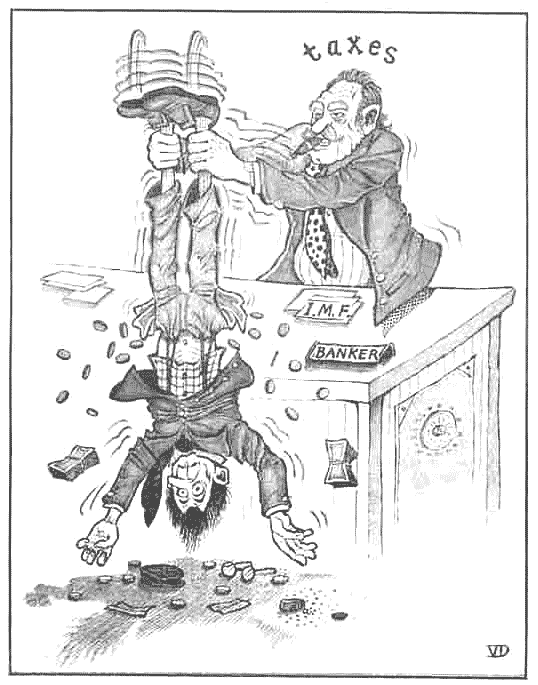
This was published in The Economic Times on September 29. As they say, one can never run away from taxes. US citizens deputed to other countries may now end up paying more tax.
Click here for the link on www.economictimes.com
Or else, read the text that has been pasted below:
Lubna Kably
Potpourri of tax stories
The introduction of fringe benefit tax, forced companies in India to pay taxes on fringe benefits provided to their employees. Keeping in view the demand-supply scenario of human capital, some of these companies through salary structuring passed on a portion of the fringe benefit tax to their employees. Others just had to grin and bear this levy.
Today, it is US companies that frequently depute their employees abroad that are facing a similar scenario. I happened to pick up the International Herald Tribune at an international airport lounge and this is what I learnt: The US Congress has raised taxes on Americans living abroad, forcing expats and US companies to rethink their compensation policies. Yes, we all know that US taxes its citizens on their global income, irrespective of whether they are deputed to a technology company in India or are teaching English in Japan. However, thanks to the foreign tax credit mechanism, a credit is available for foreign taxes against the taxes payable in the US.
Yet, a recently introduced legislation is set to make life more taxing. While US taxpayers will owe no tax on their first $82,400 of income earned abroad this year (against $80,000 in 2005), the new law caps the exclusion for housing allowances (rent), utilities (other than telephone), furniture rentals etc, which are common and significant salary components especially of senior personnel sent overseas. Under the earlier law there was no such cap and the sudden imposition of a cap certainly means bad news. Americans in no-tax or low-tax jurisdictions with high housing costs, like the Middle East, Singapore and Hong Kong, will be hit hardest, states this news report.
If one were to analyse, the foreign tax credit mechanism will not be effective enough, in these cases as the actual tax paid in the low tax foreign jurisdiction will be much lower than the US taxes.
International airport lounges are great for people watching. Except at times, you find to your surprise that other people have the same hobby. So, Sean who was watching me read this news item, walked up to me, glad he had found someone he could air his grievances to.
Sean who was being deputed to Bangalore may also face a greater tax brunt. He explained that on deputation one is forced to lead a more lavish lifestyle than back home. Entertaining people, which is a major role the expats, have to play, means having a lavish house, a huge allowance, including a substantial furniture allowance. For US tax exclusion purposes this allowance is now capped.
It is easier to speak about tax credits for taxes paid in the foreign country (such as India) than in actually obtaining one. Litigation does crop up. He however, hopes that his company will pick up this additional tax burden. Yet, like you or me, Sean is angry about tax evaders. The new mechanism does not have arms long enough to reach those Americans who are living abroad and are not filing their tax returns. “Believe me, if an American is not working for a US company but a foreign company, through omission or deliberate tactics, he or she tends to forget the US tax filing obligations,” he explains. Sean was in India to set up back office business operations. I wonder whether the extra burden on US expats will have a ripple effect on the Indian economy.
If an expat is being deputed to an Indian subsidiary, will the subsidiary have to indirectly bear the burden of this additional tax levy?
At the same time, there is some good news. Sean was glad to note that India is now emerging as a friendly place in which to do business. The Doing Business 2007 report released by the World Bank and the International Financial Corporation ranks 175 countries on the ease of doing business by considering factors affecting how easy it is to run and start business operations in such countries. Singapore has emerged as the easiest place in the world in which to operate a business, followed by New Zealand, US, Hong Kong (China) and the UK. India has emerged as the top reformer in South Asia. India cut the time to start a business from 71 to 25 days and reduced the corporate tax rate to 33.66%. A Supreme Court decision made enforcing collateral much simpler. Import time stood reduced through new custom procedures and reforms were introduced to strengthen investor protection. Pakistan emerges as the runner up. Yet, India still ranks relatively low at 134 and is 41 places behind China.
And as we boarded the flight, Sean leaned back in his seat, thankful that at least his business operations in India will kick off in 25 days. I certainly hope so.
(The author is a CA. Views are personal.)
Friday, August 25, 2006
A plea for hassle free tax returns
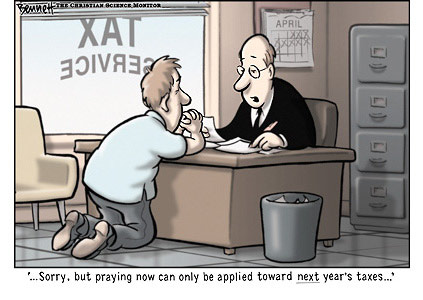
During his budget speech on February 28, 2006, our Finance Minister announced that a scheme would be introduced and people would be trained to be 'tax preparors'. Not only would this provide employment but would also help us in filing our tax returns, if the matters were not complex. However, till date, this plan does not seem to have materialised.
This is analysed in my column, Law Street for the month of August, which appeared on August 25, in The Economic Times.
You may visit the above link for a better visual feel or view the entire column here:
A plea for hassle-free tax returns
LUBNA KABLY
[ FRIDAY, AUGUST 25, 2006 02:25:12 AM]
It has been over a month now, well almost. But I still recall the day that I took off from work to file my tax return. The news in my favourite daily newspaper that very day was a big let down. It appeared that the tax department was all set to go on strike on the last day on which one could file a tax return, merely because the government had permitted the friendly neighbourhood post office to accept tax returns.
The representatives of the association of the tax officials (well, a section of them), had screamed: "This move is outrageous; we are short-staffed because there are pending vacancies. How can lowly postal clerks step on our turf?"
This country needs honest tax paying citizens. Yet, when some taxpayer-friendly step is taken, like permitting a poor soul to walk around the corner and file his return, it is not well taken. It is in bad taste to hold people to ransom. I mean, if the tax department is short-staffed, surely it should have welcomed a move that would help ease its burden during peak time? Fortunately, all went well, the strike did not go through and yes both the tax department and the post office accepted tax returns. So it was a fairy tale ending after all.
Yet, this incident did leave me pondering. To be fair to this association of the tax department, they were concerned that the postal department would accept incorrect returns, including those where the much needed PAN was missing. But, isn’t there a solution?
Zenobia Aunty thinks there is a simple solution. Let nationalised banks and post offices accept tax returns. "I will not mind paying a tiny sum to the tax preparor (remember the grand scheme announced in the budget?). This tribe of men (tax preparors) stationed behind desks at banks and post offices will review my return, make sure all details are contained in my return and give me a chit of having filed my return. It will be so much easier for my creaking bones to go to the post office next door instead of to a far off tax office."
Did I hear someone say, e-filing? My dear, that is not easy. A corporate lawyer pal is undergoing treatment for baldness. The result of frequent revision in various e-forms that were required to be filed under the Companies Act. A plethora of bugs led to revision and re-revision in some cases and he was left tearing his hair out.
This bit of news makes me shudder. It now appears that India Inc will have to file its returns online and, yes sir, the forms have been revised. Believe me, it is so much easier to write about these things, rather than having to actually face the music.
Talking about e-returns has made me think about blogs. Yes, Indian bloggers and surfers were cut off from blog land for some time. A pal and scribe of this paper wrote that perhaps bloggers will learn from this and be more productive instead of concentrating on the ME factor in their blogs.
This prompted me to begin a search on whether any bloke out there in the world has actually tried to come clean regarding his taxes in the blog world. After all, PC would find this blog productive.
I actually discovered a very famous blogger, Julian Dibbell. Have you ever got entangled in the cyber web of massively multiplayer online games (MMOs)? Well, if you haven’t, let me explain. To gain greater glory in this game, players actually purchase virtual weapons, protective suits of armour, magic spells, power pills and what have you from other players on e-auction sites for real money.
Way back in June 2003, Julian wrote on his blog: "On April 15, 2004, I will truthfully report to the IRS that my primary source of income is the sale of imaginary goods and that I earn more from it, on a monthly basis, than I have ever earned as a professional writer."
True to his word he declared that his earnings from selling items procured while playing an MMO game — Ultima Online — were US$ 11,000. He paid taxes on the same.
But the IRS was perplexed with his query: what about the various virtual assets which he owns, such as protective suits of armour? Would these be subject to tax? He was given a non-binding view that such virtual assets even if they could be converted into cash, would not be taxed. It is only the cash which he actually pocketed that would be his income and that would be taxable. The IRS is still pondering over his query.
Unlike Julian, I am not approaching the tax department with complex virtual issues, but with just a plea. Let physical filing of my tax return be a simple, hassle-free affair. Give me the option of e-filing or paper filing. Give me the option of filing at a tax office or bank branch. And please give me this option, irrespective of whether I am an individual tax payer or a new entrepreneur or a corporate giant. Amen to that.
(The author is a CA. Views are personal)
Subscribe to:
Posts (Atom)

 Posts
Posts


